Đáp án IELTS Listening: đề thi thử Academic 1
Nên làm bài trước rồi mới xem đáp án. Mỗi câu có đáp án, cách viết khác được chấp nhận, căn cứ và giải thích bằng tiếng Việt.
Part 1: Enrolling on an evening pottery course
Gọi điện đăng ký khóa học làm gốm buổi tối cho người mới bắt đầu
Questions 1–6
Complete the form. Write ONE WORD AND/OR A NUMBER for each answer.
Brackenford Arts Centre: Enrolment Form
Course: Pottery for Beginners (Thursday evenings)
First name: Daniel
Surname: (1) ______
Address: 27 (2) ______ Road, Brackenford
Phone: (3) ______
Found out about course from: (4) ______
Course start date: (5) ______ January
Amount to pay: £(6) ______
-
1.
Đáp án: Pettifer
Daniel đánh vần họ: P-E-double T-I-F-E-R. Double T là hai chữ T đứng liền nhau. Bẫy nằm ở nguyên âm sau hai chữ T: khi Daniel nói cả tên, âm này đọc lướt rất nhẹ nên dễ đoán nhầm là E. Lễ tân hỏi lại "was it I or E?" và Daniel đáp An I. Người Việt hay nhầm tên hai chữ cái này: E đọc /iː/ (gần "i"), còn I đọc /aɪ/ (gần "ai"). Đáp án: Pettifer; viết Petifer hay Pettefer đều mất điểm. Từ vựng: surname (n): họ; spell (v): đánh vần.
Căn cứ: “It's P-E-T-T-I-F-E-R.”
-
2.
Đáp án: Orchard
Daniel đọc địa chỉ: 27 Orchard Road, here in Brackenford. Phiếu đã in sẵn số 27 và chữ Road, nên chỉ điền tên đường Orchard. Lễ tân không nhắc lại tên đường, vậy bạn chỉ được nghe một lần và phải tự viết đúng chính tả: or-chard, có h sau c, kết thúc bằng -ard. Viết "Orchard Road" là hai từ, vượt giới hạn ONE WORD AND/OR A NUMBER nên mất điểm. Từ vựng: orchard (n): vườn cây ăn quả; round the corner (cụm từ): ở rất gần.
Căn cứ: “It's 27 Orchard Road, here in Brackenford.”
-
3.
Đáp án: 07700 900 358 (chấp nhận: 07700900358 / 07700 900358)
Lần đầu Daniel đọc 07700 900 385, rồi tự sửa: "I've got the last two the wrong way round" (tôi đọc ngược hai số cuối) và đọc lại trọn số đúng: 07700 900 358. Đây là bẫy tự sửa lời quen thuộc của Part 1: nghe hết lượt lời rồi mới chốt. Lễ tân không đọc lại số, nên đây là lần duy nhất bạn nghe số đúng. Người Anh đọc số 0 là "oh", hai số giống nhau đứng liền là "double" (double oh = 00). Từ vựng: mobile (n): điện thoại di động; the wrong way round (cụm từ): ngược thứ tự.
Căn cứ: “It's 07700 900 358.”
- Phone ≈ the best number to reach you on
-
4.
Đáp án: neighbour (chấp nhận: neighbor)
Dòng trên phiếu là Found out about course from (biết đến khóa học qua ai, qua đâu), còn lễ tân hỏi bằng cách nói khác: "how you heard about us". Daniel trả lời ngay: my neighbour, actually. Người hàng xóm đã học khóa này năm ngoái và cứ khuyên anh thử. Đáp án: neighbour (chính tả Anh); neighbor (chính tả Mỹ) cũng được chấm đúng. Viết "my neighbour" là hai từ, vượt giới hạn. Lỗi chính tả hay gặp: neibour, nieghbour. Từ vựng: neighbour (n): hàng xóm; give it a go (cụm từ): thử làm một việc.
Căn cứ: “Oh, my neighbour, actually.”
- Found out about course from ≈ how you heard about us
-
5.
Đáp án: 14th (chấp nhận: 14 / fourteenth / the 14th / 14th January / 14 January / January 14th / January 14)
Daniel chưa hỏi, lễ tân đã chủ động nói về ngày học. 7th January là ngày phần lớn các khóa học tối thứ Năm bắt đầu, nhưng "pottery starts a week later" vì giáo viên vắng tuần đầu: So your first class would be the 14th. Không có chữ No nào báo hiệu sửa lời; chính chữ But cho biết ngày 7 bị loại. Phiếu đã in sẵn January, nên chỉ cần điền 14th (14 hoặc fourteenth cũng đúng); chép thêm January vẫn trong giới hạn một từ và một số nên không bị trừ, nhưng không cần thiết. Từ vựng: tutor (n): giáo viên hướng dẫn; mention (v): nhắc đến.
Căn cứ: “So your first class would be the 14th.”
- Course start date ≈ your first class would be
-
6.
Đáp án: 92 (chấp nhận: £92 / £ 92 / ninety-two / 92.00 / £92.00 / 92 pounds)
Daniel hỏi học phí, lễ tân đáp gọn: It's £92 for the ten weeks, đã gồm đất sét, men và công nung. Phiếu ghi Amount to pay (số tiền phải trả) và đã in sẵn ký hiệu £, nên điền 92; viết £92 hay ninety-two cũng được tính đúng. Con số ten đứng ngay sau là số tuần của khóa học, không phải số tiền. Mẹo: nên viết số bằng chữ số (92); nếu viết bằng chữ thì dùng dạng có gạch nối ninety-two. Từ vựng: glaze (n): men gốm; firing (n): công đoạn nung gốm trong lò.
Căn cứ: “It's £92 for the ten weeks.”
- Amount to pay ≈ how much is the course
Questions 7–10
Complete the notes. Write ONE WORD ONLY for each answer.
Course information
Classes take place in the (7) ______
Old clothes recommended; no (8) ______
Free parking after 6 p.m. behind the (9) ______
Final class: exhibition for family and friends
Bring a (10) ______ to take work home
-
7.
Đáp án: basement
Daniel hỏi chung chung cần biết gì trước buổi đầu. Lễ tân trả lời trước hết về địa điểm: we're down in the basement (chúng tôi ở dưới tầng hầm), khớp với Classes take place in the... trên ghi chú. Reception chỉ là mốc để tìm cầu thang (take the stairs next to reception), không phải nơi học. Viết "the basement" là hai từ, vượt giới hạn ONE WORD ONLY. Từ vựng: basement (n): tầng hầm; stairs (n): cầu thang.
Căn cứ: “Well, we're down in the basement, so just take the stairs next to reception.”
- Classes take place in the ≈ we're down in the
-
8.
Đáp án: jewellery (chấp nhận: jewelry)
Daniel hỏi nên mặc gì (what should I wear?). Lễ tân dặn mặc đồ cũ ("something old", ghi chú viết lại thành Old clothes recommended) rồi thêm: leave your jewellery at home, vì đất sét dính vào mọi thứ. Để ở nhà chính là "no ..." trên ghi chú. Đáp án: jewellery (chính tả Anh) hoặc jewelry (chính tả Mỹ); viết jewelery hay jewellry đều sai chính tả. Từ vựng: jewellery (n): đồ trang sức; clay (n): đất sét.
Căn cứ: “And leave your jewellery at home.”
- Old clothes recommended ≈ something old
- no … ≈ leave your … at home
-
9.
Đáp án: library
Lễ tân nhắc hai bãi đỗ xe. Bãi của siêu thị bên kia đường (supermarket car park) thu phí đến 8 giờ tối, nên không khớp Free parking after 6 p.m. Học viên buổi tối đỗ xe behind the library, và "It's free after 6" chính là miễn phí sau 6 giờ. Phương án đầu bị loại chỉ bằng chữ but, không có chữ No. Chính tả: library có hai chữ r (li-bra-ry); lỗi hay gặp là libary. Từ vựng: car park (n): bãi đỗ xe (tiếng Mỹ: parking lot); charge (v): thu phí.
Căn cứ: “Most of our evening students park behind the library.”
- Free parking after 6 p.m. ≈ It's free after 6
-
10.
Đáp án: box
Sau khi nói về buổi triển lãm cuối khóa, lễ tân dặn thêm: bring a box with you that last night, to take everything home in (mang theo một cái hộp vào buổi cuối để đựng đồ mang về). Daniel hỏi lại túi có được không, và lễ tân giải thích People do bring carrier bags, but things just get broken: người ta hay mang túi nhưng đồ gốm dễ vỡ. Vì vậy đáp án là box; bag là bẫy được nhắc sau và bị gạt đi. Viết "a box" là hai từ, vượt giới hạn ONE WORD ONLY. Dòng Final class trên ghi chú đã in sẵn chữ exhibition, nên phần cần nghe là vật phải mang theo. Từ vựng: carrier bag (n): túi xách tay bằng ni-lông; take something home (v): mang về nhà.
Căn cứ: “Oh, and bring a box with you that last night, to take everything home in.”
- Bring a ≈ bring a … with you that last night
- to take work home ≈ to take everything home in
Transcript Part 1
- Part 1. You will hear a man phoning a community arts centre to enrol on a course. First, you have some time to look at questions 1 to 6.
- Now listen carefully and answer questions 1 to 6.
- Receptionist: Good morning, Brackenford Arts Centre. How can I help?
- Daniel: Oh, hi. Um, I'm ringing about the pottery course for beginners, the evening one. I was wondering if there were any places left.
- Receptionist: Let me just have a look. Yep, you're in luck. There are three left in the Thursday group.
- Daniel: Oh, great. Thursdays would be perfect, actually. I should say, though, I've never done anything like this before.
- Receptionist: Oh, don't worry, most people haven't. It really is for complete beginners. You start with simple things like bowls, and by the end most people are having a go on the wheel.
- Daniel: That sounds ideal. And what time does it start?
- Receptionist: It starts at 6:30 and finishes at 9.
- Daniel: Perfect. Can I book over the phone, or do I need to come in?
- Receptionist: I can do it all now, no problem. I'll just need a few details for the form. Can I take your name?
- Daniel: Yes, it's Daniel Pettifer.
- Receptionist: And how do you spell your surname?
- Daniel: It's P-E-T-T-I-F-E-R.
- Receptionist: Sorry, the line's not great. P-E-T-T, and then was it I or E?
- Daniel: An I. Then F-E-R.
- Receptionist: Lovely. And what's your address, Daniel?
- Daniel: It's 27 Orchard Road, here in Brackenford.
- Receptionist: Oh, you're just round the corner, then. You could walk here.
- Daniel: I could, but I'll be coming straight from work, so I'll probably drive.
- Receptionist: Fair enough. And what's the best number to reach you on?
- Daniel: My mobile, probably. It's 07700 900 385. Oh, hang on, I've got the last two the wrong way round. It's 07700 900 358.
- Receptionist: Great, thanks. And, um, can I ask how you heard about us? We have to put it on the form.
- Daniel: Oh, my neighbour, actually. She did the course last year, and she keeps telling me I should give it a go. Half the mugs in her kitchen are ones she's made.
- Receptionist: Oh, good for her. We get a lot of people that way. Right, one thing I should mention. Most of our Thursday courses start on the 7th of January.
- Daniel: OK.
- Receptionist: But pottery starts a week later, because the tutor's away that first week. So your first class would be the 14th.
- Daniel: Oh, that's actually better for me. I'm visiting my sister that week. She lives up in Scotland, so it's a bit of a trip.
- Receptionist: Oh, nice.
- Daniel: And how much is the course?
- Receptionist: It's £92 for the ten weeks. And that includes all your clay and glazes, and the firing.
- Daniel: Oh, that's not bad at all. I thought it'd be more, to be honest. Can I pay when I come in?
- Receptionist: Yeah, of course. You can pay by card or cash at reception on your first night.
- Daniel: Great, I'll do that.
- Before you hear the rest of the conversation, you have some time to look at questions 7 to 10.
- Now listen and answer questions 7 to 10.
- Daniel: Oh, one more thing, sorry. Who's taking the class? Is it the same tutor my neighbour had?
- Receptionist: It'll be Rosa, yeah. She's been teaching here for years, and she's brilliant with beginners. Really patient.
- Daniel: Oh, good. And is there anything I need to know for the first class?
- Receptionist: Um, let me think. Well, we're down in the basement, so just take the stairs next to reception. There's a sign at the bottom, so you can't miss it.
- Daniel: Right. And what should I wear?
- Receptionist: Oh, something old, obviously. And leave your jewellery at home. Clay gets into everything.
- Daniel: Good point. I hadn't thought of that. And what's parking like near you?
- Receptionist: Yeah, it's not bad. There's the supermarket car park over the road, but they charge till 8.
- Daniel: Right.
- Receptionist: Most of our evening students park behind the library. It's free after 6, and it's only a couple of minutes' walk.
- Daniel: Oh, great, I'll park there, then. And, um, do we get to take home what we make?
- Receptionist: Of course, once it's been fired. We do hang on to everything until the end, though.
- Daniel: Oh, why's that?
- Receptionist: Well, on the last Thursday of the course, we put on a little exhibition, and you can bring along your partner, the kids, whoever you like. It's always really popular.
- Daniel: Oh, lovely. My daughter will love that. She's already asked me to make her a vase.
- Receptionist: Well, you never know! Our beginners always surprise themselves. Oh, and bring a box with you that last night, to take everything home in.
- Daniel: A box? Wouldn't a bag do?
- Receptionist: People do bring carrier bags, but things just get broken. Right, you're all booked in, Daniel. We'll send you a text to confirm your place.
- Daniel: Brilliant. Thanks very much for your help.
- Receptionist: No worries. See you in January. Bye now.
- That is the end of Part 1. You now have one minute to check your answers to Part 1.
Part 2: Volunteering at Redshank Point Nature Reserve
Tình nguyện viên tại khu bảo tồn thiên nhiên ven biển
Questions 11–15
What does the speaker say about each volunteer activity? Choose the correct answer for each activity and move it into the gap.
Comments: A It can be done from home. · B It only takes place in summer. · C It is the most popular activity. · D It requires volunteers to attend a course first. · E Its start time changes every week. · F It is new this year. · G It is physically demanding.
-
11. Bird counts
Đáp án: E
Người nói giải thích việc đếm chim phải làm lúc nước lớn (high tide), mà thủy triều lên muộn hơn khoảng 50 phút mỗi ngày, nên the counts never start at the same time two weeks in a row: không có hai tuần liền nào bắt đầu cùng một giờ. Nghĩa là giờ bắt đầu thay đổi hằng tuần, chọn E. Bẫy trùng từ: ngay trước đó cô nói you don't have to go on a course first, lặp gần nguyên văn cụm course first của D nhưng ở dạng phủ định, nên D sai với hoạt động này. Từ vựng: wading bird (n): chim lội ven nước; rota (n): lịch phân ca; in a row (phr): liên tiếp.
Căn cứ: “The tide comes in about 50 minutes later each day, so the counts never start at the same time two weeks in a row.”
- Its start time changes every week ≈ the counts never start at the same time two weeks in a row
-
12. Beach cleans
Đáp án: C
Ngay khi giới thiệu hoạt động, người nói cho biết Every year, more volunteers put their names down for this than for anything else we do: năm nào số người đăng ký dọn bãi biển cũng nhiều hơn mọi hoạt động khác, tức là phổ biến nhất (C). Lần này bẫy nằm sau đáp án. Cụm only happen in the summer gần như trùng nguyên văn với B nhưng được nhắc để bác bỏ: thực tế hoạt động diễn ra hằng tháng, quanh năm. Câu since the reserve opened 20 years ago cho thấy hoạt động đã có 20 năm, nên F (mới năm nay) cũng sai. Từ vựng: put your name down (phr v): đăng ký tham gia; all year round (phr): quanh năm.
Căn cứ: “Every year, more volunteers put their names down for this than for anything else we do, probably because you can bring your family along.”
- It is the most popular activity ≈ more volunteers put their names down for this than for anything else we do
-
13. School visits
Đáp án: D
Câu then chốt: everybody has to do half a day's training with our education officer before they can take part: ai cũng phải học nửa ngày với cán bộ giáo dục trước khi được tham gia. Half a day's training ... before là cách nói lại của attend a course first, nên chọn D. Để ý: chữ course xuất hiện ở phần đếm chim (câu 11) để gài bẫy, còn đáp án thật lại dùng từ đồng nghĩa training. Bẫy khác: It isn't hard work physically (đường đi ngắn, bằng phẳng) loại G. Từ vựng: term time (n): thời gian trong học kỳ; take part (phr v): tham gia.
Căn cứ: “Since you'll be working with young children, everybody has to do half a day's training with our education officer before they can take part.”
- It requires volunteers to attend a course first ≈ everybody has to do half a day's training ... before they can take part
-
14. Scrub clearing
Đáp án: G
Đáp án đến trước: I won't pretend it's easy và you do need to be fairly fit. Phải cắt bụi kim tước rồi kéo tới đống lửa suốt 3 tiếng, cần thể lực khá tốt, tức là công việc nặng nhọc (G). Hai bẫy theo sau: we always start at 9:30 cho thấy giờ bắt đầu cố định, loại E; from October to February là các tháng thu và đông, trái với B (chỉ diễn ra vào mùa hè). Từ vựng: gorse (n): cây bụi kim tước có gai, hoa vàng; bonfire (n): đống lửa đốt ngoài trời; physically demanding (adj): đòi hỏi nhiều sức lực.
Căn cứ: “You'll spend 3 hours cutting back gorse and dragging it to the bonfire, so you do need to be fairly fit.”
- It is physically demanding ≈ I won't pretend it's easy ... you do need to be fairly fit
-
15. Wildlife cameras
Đáp án: A
Người nói cho biết ảnh được lưu trực tuyến nên you don't need to come to the reserve at all. You can do it from your own kitchen table: không cần đến khu bảo tồn, ngồi ở bàn bếp nhà mình cũng làm được. Đó là làm tại nhà, chọn A. Bẫy nằm sau đáp án: có chữ new nhưng trong câu phủ định It isn't a new project, dự án đã chạy 3 năm, nên F sai. Cụm whenever it suits you nói việc người làm tự chọn giờ, không phải lịch hoạt động thay đổi hằng tuần như E. Từ vựng: identify (v): nhận diện; suit (v): thuận tiện cho ai.
Căn cứ: “All the photos are stored online, so you don't need to come to the reserve at all. You can do it from your own kitchen table, whenever it suits you.”
- It can be done from home ≈ you don't need to come to the reserve at all
- from home ≈ from your own kitchen table
Questions 16–20
Label the map. Choose the correct letter, A–H, for each label.
A · B · C · D · E · F · G · H
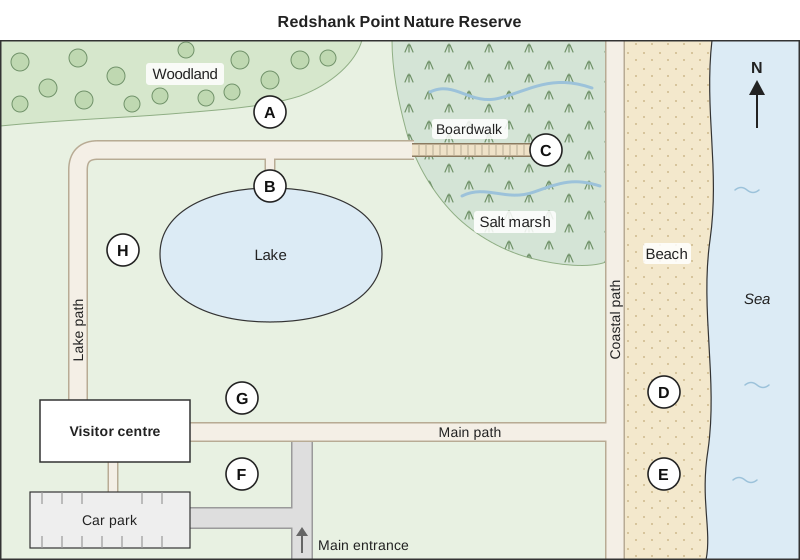
-
16. Tool shed
Đáp án: F
Mốc xuất phát: Visitor centre ở góc dưới bên trái. Ra cửa chính là tới Main path, chạy về phía đông. Khi đi về phía đông, on your right là phía nam của lối đi. Chỗ đầu tiên bên phải, before you reach the road from the main entrance (trước con đường đi lên từ Main entrance), là F, nằm giữa Car park và con đường đó. G nằm đối diện, ở bên trái (phía bắc) Main path: bẫy dành cho người nhầm trái với phải. Từ vựng: tool shed (n): nhà kho dụng cụ; pass (v): đi ngang qua.
Căn cứ: “The first thing you'll pass on your right, before you reach the road from the main entrance, is the tool shed.”
- F: south side of the main path, west of the entrance road ≈ on your right, before you reach the road from the main entrance
-
17. Picnic area
Đáp án: H
Lake path đi lên phía bắc từ Visitor centre, dọc bờ tây của Lake. About halfway up, tức khoảng giữa bờ tây của hồ, khu dã ngoại ở on your right, between the path and the water: bên phải (phía đông) lối đi, kẹp giữa lối đi và mặt nước. Chỉ H nằm đúng chỗ này. G cũng nằm giữa một lối đi và hồ nhưng ở phía nam hồ, cạnh Main path; B ở bờ bắc, là chỗ chỉ tới sau khi lối đi rẽ phải. Từ vựng: halfway up (phr): đi được nửa đường lên phía trên; picnic area (n): khu dã ngoại.
Căn cứ: “About halfway up, you'll see the picnic area on your right, between the path and the water.”
- H: between the lake path and the west side of the lake ≈ About halfway up, you'll see the picnic area on your right, between the path and the water
-
18. Bird hide
Đáp án: B
Lối đi turns right: đang đi lên phía bắc mà rẽ phải tức là quay sang hướng đông, chạy dọc phía bắc của hồ, rừng ở bên trái. Người nói nhắc chòi quan sát cũ on the edge of the woodland nhưng nói rõ nó was taken down (đã bị dỡ bỏ), nên A, điểm ở bìa rừng, là bẫy. Chòi mới ở about halfway along, on your right, cuối lối nhỏ dẫn xuống mép nước: đó là B, sát bờ bắc của hồ. Từ vựng: bird hide (n): chòi ẩn nấp để quan sát chim; take down (phr v): tháo dỡ; water's edge (n): mép nước.
Căn cứ: “If you've visited before, you might remember the old bird hide on the edge of the woodland, but that was taken down last winter. The new one is about halfway along, on your right, at the end of a short track that goes down to the water's edge.”
- B: on the north shore of the lake, south of the lake path ≈ about halfway along, on your right, at the end of a short track that goes down to the water's edge
-
19. Viewing platform
Đáp án: C
Tiếp tục đi về phía đông, Lake path turns into a boardwalk that goes out into the salt marsh, thành lối đi lát ván dẫn vào đầm lầy nước mặn. Người nói lưu ý lối ván stops before it reaches the coastal path, và đài quan sát nằm at the very end of the boardwalk. Trên bản đồ, điểm cuối lối ván là C. D và E nằm trên bãi biển, lối ván không dẫn tới đó nên không thể là đài quan sát này. Từ vựng: boardwalk (n): lối đi lát ván; salt marsh (n): đầm lầy nước mặn; viewing platform (n): đài quan sát.
Căn cứ: “The viewing platform is at the very end of the boardwalk, and at high tide it's the best place to watch the wading birds.”
- C: at the end of the boardwalk in the salt marsh ≈ at the very end of the boardwalk
-
20. First-aid hut
Đáp án: D
Đi hết Main path về phía đông sẽ ra Coastal path. Turn left there: đang đi về phía đông mà rẽ trái nghĩa là đi lên phía bắc. Trạm sơ cứu ở just a few metres along on your right, on the beach itself: đi vài mét, bên phải, tức phía đông, ngay trên bãi biển. Đó là D, ngay phía bắc chỗ Main path gặp Coastal path. E cũng nằm trên bãi biển nhưng ở phía nam: chỉ đúng nếu rẽ phải, bẫy nhầm hướng rẽ. Từ vựng: first-aid hut (n): chòi sơ cứu; come out onto (phr v): dẫn ra tới; on duty (phr): đang trực.
Căn cứ: “Turn left there, and the first-aid hut is just a few metres along on your right, on the beach itself.”
- D: on the beach, just north of where the main path meets the coastal path ≈ Turn left there, and the first-aid hut is just a few metres along on your right, on the beach itself
Transcript Part 2
- Part 2. You will hear a volunteer coordinator talking to a group of new volunteers at a nature reserve. First, you have some time to look at questions 11 to 15.
- Now listen carefully and answer questions 11 to 15.
- Coordinator: Good morning, everyone, and welcome to Redshank Point Nature Reserve. My name's Anita Mensah, and I'm the volunteer coordinator here. Thank you all for coming along today.
- Coordinator: I'll start by telling you about the different kinds of work you can get involved in, and then I'll show you around the site on the map.
- Coordinator: First of all, the bird counts. Once a week, a small team records the number of wading birds on the reserve. You don't need to be an expert, and you don't have to go on a course first. You'll simply be paired with one of our regular counters.
- Coordinator: The thing to be aware of is that the counts are done at high tide, when the birds gather on the marsh. The tide comes in about 50 minutes later each day, so the counts never start at the same time two weeks in a row. Do keep an eye on the rota on the noticeboard.
- Coordinator: Next, the beach cleans. Every year, more volunteers put their names down for this than for anything else we do, probably because you can bring your family along.
- Coordinator: People often assume the beach cleans only happen in the summer, but actually we run one on the first Sunday of every month, all year round, and we've been doing them since the reserve opened 20 years ago. The winter storms wash up far more rubbish than the summer visitors leave behind.
- Coordinator: Then there are the school visits. Local primary schools bring classes here most weeks during term time, and volunteers help our staff take the children round the lake. It isn't hard work physically, as the walks are short and the paths are flat.
- Coordinator: Since you'll be working with young children, everybody has to do half a day's training with our education officer before they can take part. The next session is on the 14th of this month.
- Coordinator: The fourth activity is scrub clearing. Gorse and brambles are slowly spreading across the grassland, and if we left them, the birds that nest on the ground would lose their habitat.
- Coordinator: I won't pretend it's easy. You'll spend 3 hours cutting back gorse and dragging it to the bonfire, so you do need to be fairly fit. We meet on Wednesday mornings from October to February, and we always start at 9:30.
- Coordinator: And finally, the wildlife cameras. We have 12 cameras hidden around the reserve, and between them they take thousands of photos of foxes, otters and deer. Volunteers identify the animals in each picture.
- Coordinator: All the photos are stored online, so you don't need to come to the reserve at all. You can do it from your own kitchen table, whenever it suits you. It isn't a new project, by the way. It's been running for 3 years.
- Before you hear the rest of the talk, you have some time to look at questions 16 to 20.
- Now listen and answer questions 16 to 20.
- Coordinator: Right, a few practical points before we look at the map. Whenever you arrive, please sign in at the reception desk in the visitor centre, and sign out again when you leave, so that we always know who's on site. Tea and coffee are free in the volunteers' room upstairs.
- Coordinator: Now, if you look at the map, north is at the top, and we're here in the visitor centre, near the bottom left-hand corner.
- Coordinator: When you come out of the main door, you're on the main path, which runs east towards the sea. The first thing you'll pass on your right, before you reach the road from the main entrance, is the tool shed. That's where you'll pick up gloves and tools for the scrub clearing.
- Coordinator: The path that leads north from the visitor centre is the lake path, and it goes up the west side of the lake. About halfway up, you'll see the picnic area on your right, between the path and the water. It's a lovely spot for lunch.
- Coordinator: Further on, the path turns right and runs along the north side of the lake, with the woodland on your left. If you've visited before, you might remember the old bird hide on the edge of the woodland, but that was taken down last winter. The new one is about halfway along, on your right, at the end of a short track that goes down to the water's edge.
- Coordinator: If you keep going east, the lake path turns into a boardwalk that goes out into the salt marsh. It stops before it reaches the coastal path, so you can't get to the beach that way. The viewing platform is at the very end of the boardwalk, and at high tide it's the best place to watch the wading birds.
- Coordinator: Lastly, the first-aid hut. If you follow the main path all the way east, it comes out onto the coastal path. Turn left there, and the first-aid hut is just a few metres along on your right, on the beach itself. There's always someone on duty there at weekends.
- Coordinator: Right, that's everything from me. Let's get our boots on and head outside.
- That is the end of Part 2. You now have 45 seconds to check your answers to Part 2.
Part 3: Reducing food waste in the university canteens
Thảo luận học thuật: hai sinh viên chuẩn bị bài thuyết trình về giảm lãng phí thức ăn ở căng tin trường, sau đó giảng viên hướng dẫn tham gia góp ý
Questions 21–22
Choose TWO correct answers.
-
21–22. Which TWO problems did the students find with their survey?
- A Some of the questions were hard to understand.
- B The sample was too small to be useful.
- C Many answers did not reflect how students really behave.
- D It took most people too long to complete.
- E Most replies came from one type of student.
Đáp án: C, E (thứ tự nào cũng được)
Leah nêu cả hai vấn đề. Link chỉ đăng trong nhóm chat ký túc xá nên nearly everyone who answered lives on campus: người trả lời gần như chỉ thuộc một nhóm → (E). Nearly 80 per cent said they rarely leave any food, nhưng hơn nửa số khay còn thức ăn, tức câu trả lời không khớp hành vi thật → (C). Ba phương án kia bị gạt, mỗi cái một kiểu: (B) Sam khoe hơn 200 câu trả lời, Leah xác nhận the number's fine; (D) Leah lo bảng hỏi quá dài nhưng phần lớn làm xong trong khoảng 4 phút; (A) Sam nói câu hỏi đã thử với nhóm seminar và nobody found them confusing. Bẫy: nghe nhắc tới chưa đủ, phải nghe ý đó được xác nhận hay bị bác. Từ vựng: halls of residence (n): ký túc xá; tray return (n): chỗ trả khay.
Căn cứ: “We only posted the link in the group chat for the halls of residence, so nearly everyone who answered lives on campus.”
- Most replies came from one type of student ≈ nearly everyone who answered lives on campus
- Many answers did not reflect how students really behave ≈ Nearly 80 per cent said they rarely leave any food, but ... there was food on well over half the trays
Questions 23–25
Choose the correct answer.
-
23. What does the catering manager say is the main cause of food waste in the canteens?
- A Students take larger portions than they can finish.
- B Food is kept in the storerooms for too long.
- C The kitchen prepares more meals than are needed.
Đáp án: C
Leah thuật lại lời quản lý căng tin: phần lớn lãng phí là food that's cooked and then never served, nhất là bữa tối, vì bếp không biết sẽ có 50 hay 200 sinh viên đến ăn. Nói cách khác, bếp nấu nhiều hơn số suất cần → (C). (A) là bẫy: đó chỉ là điều Leah đã đoán (I'd assumed…), còn quản lý nói thức ăn bỏ thừa trên đĩa chỉ là a much smaller share. (B) dùng lại từ storerooms mà Sam nhắc tới, nhưng Leah đáp Not here, apparently: nhờ hệ thống đặt hàng mới nên rất ít đồ bị quá hạn. Từ vựng: go off (phr v): (thức ăn) bị hỏng, ôi thiu; turn up (phr v): có mặt, xuất hiện.
Căn cứ: “Most of it is food that's cooked and then never served, especially in the evenings, because the kitchen has no idea whether 50 students will turn up or 200.”
- The kitchen prepares more meals than are needed ≈ food that's cooked and then never served
- the main cause ≈ Most of it
-
24. What does Sam think is the main weakness of the Kelsford University study?
- A It was carried out over too short a period.
- B It involved too few students.
- C It relied on what students said about themselves.
Đáp án: A
Sam nêu ngay điểm yếu chính: The whole thing only ran for 3 weeks, nên sinh viên có thể lấy ít thức ăn hơn chỉ vì thay đổi còn mới, và không biết hiệu quả có kéo dài hay không → (A): too short a period = only ran for 3 weeks. Leah gợi ra hai khả năng khác nhưng Sam bác cả hai: (B) sai vì gần 2.000 sinh viên ăn ở đó mỗi ngày, mẫu không hề nhỏ; (C) sai vì nghiên cứu không dùng bảng hỏi mà cân lượng thức ăn thừa thật. Sam gạt cả hai (neither of those worries me), nên điểm yếu anh nêu đầu tiên vẫn là điểm chính. Ở Part 3, ý được nêu đầu tiên không phải lúc nào cũng sai: hãy nghe đến câu chốt. Từ vựng: sample (n): mẫu nghiên cứu; last (v): kéo dài, duy trì.
Căn cứ: “The whole thing only ran for 3 weeks, so people may have taken less simply because the change was new.”
- carried out over too short a period ≈ only ran for 3 weeks
- the main weakness ≈ But I'm less sure about it now
-
25. What do the students decide to recommend?
- A Removing the trays from every canteen
- B Requiring students to reserve evening meals in advance
- C Selling leftover evening meals cheaply at closing time
Đáp án: B
Sam đề xuất sinh viên phải book their evening meal on the university app by, say, midday để bếp biết cần nấu cho bao nhiêu người. Leah đồng ý vì cách này đánh đúng vấn đề chính (nấu dư bữa tối) và chốt Let's make that our main recommendation → (B): reserve evening meals in advance = book their evening meal … by midday. (A) do chính Leah đề xuất (Shouldn't we recommend it anyway?), nhưng Sam bác: bỏ khay chỉ giảm thức ăn thừa trên đĩa, vốn là the smaller share. (C) do Sam nêu (bán rẻ phần còn thừa lúc cuối buổi tối), Leah bác: sinh viên ký túc xá đã trả trước bữa tối, còn sinh viên ở nhà thường về trước giờ đó, nên chẳng ai mua. Sam kết luận phải ngăn thức ăn bị nấu dư ngay từ đầu (stop it being cooked in the first place). Bẫy: cả ba ý đều được nói ra, và chữ recommend lại gắn với ý bị loại. Từ vựng: leftover (n, adj): (đồ ăn) thừa; tackle (v): giải quyết.
Căn cứ: “What if students had to book their evening meal on the university app by, say, midday?”
- Requiring students to reserve evening meals in advance ≈ book their evening meal on the university app by, say, midday
- decide to recommend ≈ Let's make that our main recommendation
Questions 26–30
Complete the flow-chart. Choose the correct answer and move it into the gap.
Plan for the presentation
Open the talk with a (26) ______ → Explain briefly what went wrong with the questionnaire → Present the kitchen's data as a (27) ______ → Illustrate the main recommendation with a (28) ______ → Suggest a (29) ______ to gather further evidence → Conclude the presentation with a (30) ______
A graph · B photograph · C poll · D quiz · E sketch · F survey · G table · H trial · I video
-
26.
Đáp án: D
Bẫy đổi ý: Leah và Sam đã chốt mở đầu bằng ảnh khay thức ăn thừa (Let's open with that), câu này còn trùng chữ open với sơ đồ. Dr Patel cho rằng khán giả đã quá quen với ảnh kiểu này và gợi ý Why not test them instead?: ba câu hỏi nhanh, ví dụ mỗi tuần trường bỏ đi bao nhiêu ki-lô-gam thức ăn, cho khán giả đoán rồi công bố đáp án và xem họ đúng bao nhiêu câu. Kiểm tra bằng vài câu hỏi có đáp án đúng sai chính là quiz → (D). Leah đồng ý đổi (OK, let's do that instead), nên (B) photograph sai. Đừng nhầm với (C) poll: poll là bỏ phiếu nêu ý kiến, không có đáp án đúng. Từ vựng: impact (n): sức tác động; reveal (v): công bố, tiết lộ.
Căn cứ: “Why not test them instead? Three quick questions, like how many kilos the university throws away each week.”
- Open the talk with ≈ How do we start?
- quiz ≈ test them ... Three quick questions ... see how many they got right
-
27.
Đáp án: A
Leah định trình bày số liệu của bếp bằng một bảng (table) ghi mọi bữa ăn trong 4 tuần. Dr Patel góp ý: trên slide, bảng lớn như vậy làm người nghe rối, còn a simple bar graph will show that at a glance; Leah đồng ý làm lại slide đó (I'll redo that slide tonight). Bar graph là biểu đồ cột → (A) graph. (G) table là bẫy đúng một nửa: bảng vẫn được dùng nhưng trong bài báo cáo viết (written report), còn sơ đồ này là kế hoạch cho bài thuyết trình. Từ vựng: at a glance (phr): nhìn lướt là thấy ngay; written report (n): bài báo cáo viết.
Căn cứ: “If most waste comes from evening meals, a simple bar graph will show that at a glance.”
- Present the kitchen's data ≈ the kitchen's figures
- graph ≈ a simple bar graph
-
28.
Đáp án: E
Sam đề xuất ngay: I'd just draw the booking screen by hand, vì a rough drawing là đủ để người nghe hình dung. Leah hỏi lại quay phim cảnh đặt bữa (film someone booking a meal) có thuyết phục hơn không, nhưng Sam chỉ ra ứng dụng chưa nhận đặt bữa nên sẽ phải dựng giả toàn bộ, và Leah chốt Your drawing, then → (E): sketch = rough drawing, bản vẽ phác. (I) video là bẫy về nghĩa: quay phim chính là làm video, nhưng ý này bị gạt đi. (B) photograph và (A) graph đều điền được về ngữ pháp nhưng không ai đề xuất ở đoạn này. Ở câu này ý nêu đầu tiên lại là đáp án. Từ vựng: sketch (n): bản vẽ phác; fake (v): làm giả.
Căn cứ: “I'd just draw the booking screen by hand.”
- sketch ≈ a rough drawing
- Illustrate the main recommendation ≈ draw the booking screen by hand
-
29.
Đáp án: H
Leah đề xuất ngay từ đầu: trước khi triển khai toàn trường, nên try it out in just one canteen for a term, có bếp cân lượng thức ăn thừa trước và sau. Sam hỏi lại liệu another survey có nhanh hơn không, nhưng Leah bác: khảo sát chỉ cho biết người ta nói sẽ làm gì (nhóm vừa thấy 80% nói hiếm khi bỏ thừa), còn nếu lượng thức ăn thừa ở căng tin đó thật sự giảm thì that's real evidence. Sam chốt Let's go with yours → (H): chạy thử ở một căng tin = trial. (F) survey là bẫy: được nhắc sau và bị loại. (C) poll chỉ là hỏi ý kiến và không được nhắc ở đoạn này. Ở câu này ý nêu đầu tiên lại là đáp án, nên đừng mặc định ý đầu luôn sai. Từ vựng: roll out (phr v): triển khai rộng rãi; try out (phr v): dùng thử.
Căn cứ: “I think we should suggest they try it out in just one canteen for a term, with the kitchen weighing the waste before and after.”
- to gather further evidence ≈ that's real evidence
- trial ≈ try it out in just one canteen for a term
-
30.
Đáp án: C
Leah vẫn muốn dùng ảnh khay thức ăn, lần này at the very end, đúng vị trí của câu 30, nên đây là bẫy lần hai của (B) photograph. Sam bác vì góp ý của Dr Patel về ảnh vẫn đúng, và muốn kết thúc bằng một việc khán giả tự làm: chiếu một câu hỏi (trường có nên thử đề xuất này không) và Everyone votes on their phones, kết quả hiện ngay. Leah công nhận cách này hay hơn ảnh (It's much better than my photo). Khán giả bỏ phiếu trên điện thoại và thấy kết quả ngay, tức là một cuộc thăm dò ý kiến → (C) poll, dù chữ poll không được nói ra. Đừng chọn (D) quiz: quiz có đáp án đúng sai và đã dùng ở phần mở đầu; ở đây khán giả bỏ phiếu nêu ý kiến. Từ vựng: poll (n): cuộc thăm dò ý kiến; vote (v): bỏ phiếu, bình chọn.
Căn cứ: “Everyone votes on their phones, and the results appear straight away.”
- Conclude the presentation ≈ I'd rather finish with the audience doing something
- poll ≈ Everyone votes on their phones
Transcript Part 3
- Part 3. You will hear two students, Leah and Sam, discussing a presentation about food waste at their university, and later their tutor joins them. First, you have some time to look at questions 21 to 25.
- Now listen carefully and answer questions 21 to 25.
- Sam: Leah, have you looked at the survey results yet?
- Leah: I have, Sam, and I'm not sure how much we can use them.
- Sam: Really? We got over 200 replies in a week.
- Leah: Oh, the number's fine. The trouble is who replied. We only posted the link in the group chat for the halls of residence, so nearly everyone who answered lives on campus. Students living at home probably use the canteens quite differently.
- Sam: Hmm, I hadn't thought of that.
- Leah: And I was worried it was too long, but most people finished in about 4 minutes, and hardly anyone gave up halfway.
- Sam: At least the questions were clear. We tested them on our seminar group first, and nobody found them confusing.
- Leah: True. What worries me is what people told us. Nearly 80 per cent said they rarely leave any food, but when I watched the tray return on Tuesday, there was food on well over half the trays.
- Sam: So either people don't notice what they leave, or they don't like admitting it.
- Leah: Exactly. That's why I went to see the catering manager, Grace Okafor, yesterday.
- Sam: How did that go?
- Leah: Really well. I'd assumed most of the waste would be food left on plates, but she said that's a much smaller share. Most of it is food that's cooked and then never served, especially in the evenings, because the kitchen has no idea whether 50 students will turn up or 200.
- Sam: What about food going off in the storerooms?
- Leah: Not here, apparently. A new ordering system means very little goes out of date. She also gave me the kitchen's records for the last 4 weeks. They weigh everything that's thrown away.
- Sam: Great. Now, I've been reading that Kelsford University study, where they removed the trays from their dining hall.
- Leah: And waste fell by about a quarter, didn't it?
- Sam: Yes, 27 per cent. But I'm less sure about it now. The whole thing only ran for 3 weeks, so people may have taken less simply because the change was new. We don't know if the effect lasted.
- Leah: Isn't the sample size more of a problem? Or did they just ask students what they ate, like we did?
- Sam: No, nearly 2,000 students ate there every day, and they didn't use questionnaires. They weighed the waste. So neither of those worries me.
- Leah: Fair point. Still, taking the trays away costs nothing. Shouldn't we recommend it anyway?
- Sam: Even if it worked, it only affects what's left on plates, and that's the smaller share here. What about letting people buy whatever's left at the end of the evening for a pound or two?
- Leah: Who'd buy it, though? Most students in halls have already paid for their evening meal, and people who live at home have usually gone by then.
- Sam: Then we have to stop it being cooked in the first place. What if students had to book their evening meal on the university app by, say, midday? The kitchen would know roughly how many to cook for.
- Leah: That tackles the main problem directly, and I think Grace would be open to trying it. Let's make that our main recommendation.
- Before you hear the rest of the discussion, you have some time to look at questions 26 to 30.
- Now listen and answer questions 26 to 30.
- Sam: Right, the structure. How do we start? It needs some impact.
- Leah: What about my photo from the tray return, with all those untouched bread rolls?
- Sam: Good, that would get attention. Let's open with that.
- Dr Patel: Hello, you two. Mind if I join you? How's the presentation going?
- Leah: Hi, Dr Patel. We've just decided to open with a photo of trays in the main canteen.
- Dr Patel: Hmm. Audiences have seen so many pictures of waste that they barely react. Why not test them instead? Three quick questions, like how many kilos the university throws away each week. Let them guess, then reveal the answers and see how many they got right.
- Sam: Most people will guess far too low.
- Leah: OK, let's do that instead.
- Dr Patel: And after that? Your outline says you'll go through the survey results.
- Sam: We found problems with it, so we were thinking of leaving it out.
- Dr Patel: Keep it in, but briefly, and be honest about what went wrong. Being open about the limits of your own data is exactly what I look for.
- Leah: Then the kitchen's figures. I've put them into a table, showing every meal for 4 weeks.
- Dr Patel: On a slide, a table that size will lose people. If most waste comes from evening meals, a simple bar graph will show that at a glance. Keep the table for your written report.
- Leah: Good idea. I'll redo that slide tonight.
- Dr Patel: Good. Well, I'll leave you to it.
- Sam: Thanks, Dr Patel.
- Leah: Next, our main recommendation. How do we show people the booking idea?
- Sam: I'd just draw the booking screen by hand. A rough drawing gets the idea across.
- Leah: Wouldn't it be more convincing to film someone booking a meal on their phone?
- Sam: The app can't take bookings yet, so we'd have to fake it all.
- Leah: True. Your drawing, then. And before it's rolled out across the whole university, I think we should suggest they try it out in just one canteen for a term, with the kitchen weighing the waste before and after.
- Sam: A trial for a whole term, though? Wouldn't another survey be quicker? And this time we could reach students who live at home too.
- Leah: Quicker, maybe, but a survey only tells you what people say they'll do. Remember the 80 per cent who said they rarely leave food? If the waste actually goes down in that canteen, that's real evidence.
- Sam: Fair enough. Slower, but far more convincing. Let's go with yours.
- Leah: Right, the ending. I'd still like to use my tray photo. Could it go up at the very end, while we take questions?
- Sam: Dr Patel's point about pictures still applies. I'd rather finish with the audience doing something. We could put up one question: should the university try our scheme? Everyone votes on their phones, and the results appear straight away.
- Leah: Oh, I like that. It's much better than my photo.
- That is the end of Part 3. You now have 30 seconds to check your answers to Part 3.
Part 4: How migrating birds find their way
Bài giảng sinh học: chim di cư định hướng bằng cách nào
Questions 31–32
Choose the correct answer.
-
31. What does the lecturer say is the main difficulty in studying bird navigation?
- A tracking individual birds over great distances
- B birds' ability to compensate for missing information
- C the unnatural behaviour of birds kept in cages
Đáp án: B
Câu chốt mở đầu bằng No, — dấu hiệu giảng viên bác các ý vừa nêu: the real difficulty is that birds have backup systems. Mất một tín hiệu, chim fall back on another (chuyển sang dựa vào tín hiệu khác), tức là bù được phần thông tin bị thiếu, nên thí nghiệm dễ cho kết luận sai. Đó là (B). (A) sai: theo dõi từng con chim từng rất khó, nhưng that's no longer the case. (C) sai: Nor is captivity the problem you might expect, vì chim trong lồng vẫn bồn chồn đúng mùa di cư và cố nhảy về đúng hướng bay. Từ vựng: backup (adj): dự phòng; cue (n): tín hiệu; compensate for (phr v): bù đắp cho.
Căn cứ: “No, the real difficulty is that birds have backup systems.”
- the main difficulty ≈ the real difficulty
- birds' ability to compensate for missing information ≈ birds have backup systems. Take one cue away, and they simply fall back on another
- birds kept in cages ≈ captivity / a caged migrant
-
32. What did the 1950s starling experiment suggest about young birds?
- A They are born knowing which direction to take.
- B They learn the route by following older birds.
- C They quickly correct their course when displaced.
Đáp án: A
Bị chở sang Thụy Sĩ, chim trưởng thành changed course về đúng vùng trú đông, còn chim non carried on in the same direction nên lạc tới Tây Ban Nha. Giảng viên kết luận chim non dựa vào an inherited instruction, một chỉ dẫn di truyền kiểu 'bay hướng tây nam vài tuần', tức sinh ra đã biết hướng bay: (A). (C) là việc chim trưởng thành làm, bẫy nhầm đối tượng. (B) lặp cụm learn the route, nhưng câu đó nói về ngỗng non đi theo bố mẹ, không phải điều thí nghiệm với chim sáo cho thấy. Từ vựng: inherited (adj): di truyền, bẩm sinh; displaced (adj): bị đưa khỏi chỗ cũ; wintering area (n): vùng trú đông.
Căn cứ: “Young birds, it seems, rely on an inherited instruction, something like 'fly south-west for a few weeks', rather than on any kind of map.”
- the 1950s starling experiment ≈ A famous experiment in the 1950s ... Starlings were caught
- born knowing which direction to take ≈ rely on an inherited instruction
- displaced ≈ flown to Switzerland and released
Questions 33–37
Complete the table. Write ONE WORD ONLY for each answer.
Compass systems used by migrating birds
| Compass | How it works | Research findings |
|---|---|---|
| The sun | Birds must allow for the sun's movement, using an internal (33) ______ | Starlings in cages changed direction when the sun's apparent position was shifted with (34) ______ |
| The stars | Young birds learn the fixed point that the stars appear to turn around | Birds raised in a (35) ______ took a different star as their reference point |
| The Earth's magnetic field | Birds respond to the (36) ______ of the field lines rather than to which end points north | The sensor is now thought to be in the (37) ______ |
-
33.
Đáp án: clock
Ô trống thuộc ý chim phải tính đến việc mặt trời di chuyển. Giảng viên giải thích mặt trời dịch khoảng 15 độ mỗi giờ nên chim phải biết giờ trong ngày, rồi chốt: The sun compass depends on an internal clock. Đáp án: clock. Bẫy nằm ngay trước đó: internal calendar cũng đi với chữ internal như trong bảng, nhưng lịch sinh học này chỉ báo khi nào đến mùa di cư, và giảng viên nói rõ that's not what matters here. Nghe thấy từ khóa của đề lần đầu chưa chắc đã là đáp án, phải nghe hết ý. Từ vựng: internal clock (n): đồng hồ sinh học; allow for (phr v): tính đến, bù trừ cho.
Căn cứ: “The sun compass depends on an internal clock.”
- the sun's movement ≈ the sun moves across the sky at about 15 degrees an hour
- using an internal clock ≈ depends on an internal clock
-
34.
Đáp án: mirrors
Bảng hỏi chim sáo trong lồng đổi hướng khi vị trí biểu kiến của mặt trời bị dịch đi bằng dụng cụ gì. Giảng viên: mirrors were used to make the sunlight appear to come from a different direction, the birds changed their heading to match. Đáp án: mirrors, viết số nhiều vì trước chỗ trống không có mạo từ a/the. Nhiễu: windows chỉ là cửa sổ của lồng để chim nhìn thấy trời; ngày overcast (u ám) chim bối rối, nhưng mây không phải thứ dùng để dời vị trí mặt trời. Từ vựng: apparent (adj): biểu kiến, trông có vẻ; overcast (adj): u ám; heading (n): hướng bay.
Căn cứ: “But when the sun was out and mirrors were used to make the sunlight appear to come from a different direction, the birds changed their heading to match.”
- the sun's apparent position was shifted with mirrors ≈ mirrors were used to make the sunlight appear to come from a different direction
- changed direction ≈ changed their heading to match
- starlings in cages ≈ starlings kept in round cages with windows
-
35.
Đáp án: planetarium
Hàng The stars: chim được nuôi ở đâu thì lấy một ngôi sao khác làm mốc? Giảng viên nhắc hai nhóm chim. Nhóm nuôi trong laboratory không được nhìn bầu trời đêm nên couldn't use the stars at all, tức hoàn toàn không định hướng được, vì vậy không phải đáp án. Nhóm nuôi trong planetarium có bầu trời nhân tạo quay quanh a completely different star, và chúng coi ngôi sao đó như hướng bắc. Đáp án: planetarium, chú ý chính tả. Từ vựng: planetarium (n): nhà chiếu mô phỏng bầu trời sao; constellation (n): chòm sao; reference point (n): điểm mốc.
Căn cứ: “But the key experiment involved young birds raised in a planetarium, where the artificial sky was made to turn around a completely different star.”
- took a different star as their reference point ≈ treated that star as if it marked north
- the fixed point that the stars appear to turn around ≈ which part of the sky stays still while the stars turn around it
-
36.
Đáp án: angle
Ô trống hỏi chim phản ứng với cái gì của đường sức từ, chứ không phải đầu nào chỉ hướng bắc (tức cực tính). Bẫy: câu về kim la bàn responds to polarity trùng động từ respond trong bảng, nhưng ngay sau đó giảng viên nói chim aren't sensitive to polarity at all. What they detect is the angle of the field lines. Đáp án: angle. Viết polarity là sai vì bảng đã loại trừ bằng rather than to which end points north. Góc này có ích vì đường sức chúc xuống đất về phía cực gần hơn, nên chim biết đâu là hướng về cực, đâu là hướng về xích đạo. Từ vựng: polarity (n): cực tính; field lines (n): đường sức từ; equator (n): xích đạo.
Căn cứ: “What they detect is the angle of the field lines.”
- Birds respond to ≈ What they detect is
- rather than to which end points north ≈ Birds aren't sensitive to polarity at all (one end points to magnetic north)
-
37.
Đáp án: eyes (chấp nhận: eye)
Ô trống hỏi bộ phận cảm biến từ trường now thought to be nằm ở đâu. Giảng viên nêu giả thuyết cũ trước: các hạt sắt nhỏ trong beak (mỏ). Đây là bẫy, vì đó chỉ là ý tưởng từng phổ biến một thời (for a while a popular idea was). Sau chữ However, ông chốt: most researchers now believe the magnetic compass is located in the eyes. Đáp án: eyes (viết eye cũng được chấp nhận). Câu tiếp theo củng cố: phân tử trong mắt phản ứng với ánh sáng, nên la bàn từ chỉ hoạt động khi có chút ánh sáng. Từ vựng: sensor (n): bộ phận cảm biến; particle (n): hạt nhỏ; molecule (n): phân tử.
Căn cứ: “However, most researchers now believe the magnetic compass is located in the eyes, where certain molecules react to light in a way that's affected by magnetism.”
- is now thought to be in ≈ most researchers now believe ... is located in
- the sensor ≈ the magnetic compass
Questions 38–40
Complete the notes. Write ONE WORD ONLY for each answer.
The 'map': how birds know where they are
Smell
pigeons unable to smell often fail to return from (38) ______ places
seabirds may also use smell to cross the open ocean
Landmarks
probably most useful in the (39) ______ stage of a journey
GPS data: near home, some pigeons fly along (40) ______
-
38.
Đáp án: unfamiliar
Ghi chú hỏi bồ câu mất khứu giác thường không về được từ những địa điểm thế nào. Giảng viên nói chúng vẫn tìm được đường về từ places they know well, but they often get lost when they're released somewhere unfamiliar. Đáp án: unfamiliar (lạ, chưa từng đến). Bẫy âm: nghe lướt dễ viết familiar, nghĩa ngược hẳn; hãy bám vào tiền tố un- và chữ but báo hiệu ý đối lập với vế trước. Diễn đạt lại: unable to smell ứng với sense of smell has been temporarily blocked, fail to return ứng với get lost. Từ vựng: homing pigeon (n): bồ câu đưa thư; release (v): thả ra; unfamiliar (adj): xa lạ.
Căn cứ: “Homing pigeons whose sense of smell has been temporarily blocked can still find their way home from places they know well, but they often get lost when they're released somewhere unfamiliar.”
- pigeons unable to smell ≈ Homing pigeons whose sense of smell has been temporarily blocked
- often fail to return from unfamiliar places ≈ they often get lost when they're released somewhere unfamiliar
-
39.
Đáp án: final
Ghi chú hỏi địa hình (landmarks) có lẽ hữu ích nhất ở giai đoạn nào của hành trình. Giảng viên loại trước một phương án: probably not in the early part of a journey, lúc chim chưa nhận ra gì bên dưới, nên early là bẫy. Ngay sau đó: They seem to matter most in the final stage, khi chim đến gần vùng đã biết. Đáp án: final. Cặp diễn đạt lại cần nhận ra: most useful trong ghi chú ứng với matter most trong bài. Từ vựng: landmark (n): mốc địa hình; coastline (n): đường bờ biển; stage (n): giai đoạn.
Căn cứ: “They seem to matter most in the final stage, when a bird is nearing an area it knows.”
- most useful ≈ matter most
- the final stage of a journey ≈ the final stage, when a bird is nearing an area it knows
-
40.
Đáp án: roads
Ghi chú hỏi dữ liệu GPS cho thấy khi gần nhà, một số bồ câu bay dọc theo thứ gì. Giảng viên: GPS tracking of homing pigeons has even shown that, close to home, some birds follow roads for long stretches, giống như tài xế lái xe. Đáp án: roads. Nhiễu: ngay trước đó có coastlines, rivers and mountain ranges, nhưng đó là các mốc địa hình nói chung, không phải phát hiện từ dữ liệu GPS. Diễn đạt lại: near home ứng với close to home, fly along ứng với follow. Từ vựng: GPS tracking (n): theo dõi bằng định vị GPS; mountain range (n): dãy núi; stretch (n): quãng, đoạn dài.
Căn cứ: “GPS tracking of homing pigeons has even shown that, close to home, some birds follow roads for long stretches, much as a human driver would.”
- GPS data ≈ GPS tracking of homing pigeons
- near home ≈ close to home
- fly along roads ≈ follow roads for long stretches
Transcript Part 4
- Part 4. You will hear a lecturer giving a talk about how migrating birds find their way. First, you have some time to look at questions 31 to 40.
- Now listen carefully and answer questions 31 to 40.
- Lecturer: Good morning, everyone. Today I'm going to look at one of the great puzzles of animal behaviour: how migrating birds find their way. Every autumn, billions of birds fly to wintering areas thousands of kilometres away, and many return to exactly the same nest site the following spring. So how do they do it?
- Lecturer: First of all, why has this been so hard to study? Following individual birds used to be almost impossible, but that's no longer the case: tracking tags are now light enough to fit on a songbird. Nor is captivity the problem you might expect.
- Lecturer: A caged migrant becomes restless at exactly the time its wild relatives are leaving, and it keeps trying to hop in the direction it would be flying. No, the real difficulty is that birds have backup systems. Take one cue away, and they simply fall back on another, so an experiment can easily suggest that a cue doesn't matter when in fact it does.
- Lecturer: Before we look at the details, it helps to separate two abilities: a compass, which tells a bird which way to fly, and a map, which tells it where it actually is. A famous experiment in the 1950s showed why this matters. Starlings were caught in the Netherlands during their autumn migration, flown to Switzerland and released.
- Lecturer: The adults changed course and headed for their normal wintering area. The young birds, however, simply carried on in the same direction and ended up in Spain and southern France. Young birds, it seems, rely on an inherited instruction, something like 'fly south-west for a few weeks', rather than on any kind of map.
- Lecturer: It's true that young geese learn the route by travelling with their parents, but many small songbirds make their first journey entirely alone.
- Lecturer: Right, let's look at the compasses. The first is the sun, and the difficulty here is that the sun moves across the sky at about 15 degrees an hour. This means a bird using it as a compass has to know the time of day. Birds certainly have an internal calendar, which tells them when it's time to migrate, but that's not what matters here. The sun compass depends on an internal clock.
- Lecturer: The first evidence that birds use the sun at all came from starlings kept in round cages with windows. On overcast days, the birds seemed confused. But when the sun was out and mirrors were used to make the sunlight appear to come from a different direction, the birds changed their heading to match.
- Lecturer: Now, turning to the second compass: the stars. Most small songbirds actually migrate at night, but they don't seem to have any built-in knowledge of particular constellations. Instead, young birds learn which part of the sky stays still while the stars turn around it. In the northern hemisphere, that's the area around the Pole Star.
- Lecturer: Experiments carried out around 1970 showed this very neatly. Birds raised indoors in a laboratory, without ever seeing the night sky, couldn't use the stars at all. But the key experiment involved young birds raised in a planetarium, where the artificial sky was made to turn around a completely different star.
- Lecturer: When autumn came, those birds treated that star as if it marked north, and tried to fly in the wrong direction.
- Lecturer: The third compass is magnetic, and it's rather different from an ordinary compass. A compass needle responds to polarity: one end points to magnetic north. Birds aren't sensitive to polarity at all. What they detect is the angle of the field lines.
- Lecturer: The lines point down into the ground on the side facing the nearer pole, so this angle tells a bird which way is towards the pole and which is towards the equator. As for where the sensor is, for a while a popular idea was that tiny iron particles in the beak were responsible.
- Lecturer: However, most researchers now believe the magnetic compass is located in the eyes, where certain molecules react to light in a way that's affected by magnetism. That would explain why it only works when there's some light.
- Lecturer: So much for the compasses. But a compass only tells a bird which way to go, not where it is. What about the map, then? Here, the most surprising evidence concerns smell.
- Lecturer: Homing pigeons whose sense of smell has been temporarily blocked can still find their way home from places they know well, but they often get lost when they're released somewhere unfamiliar. And seabirds, which cross vast areas of open ocean, seem to rely on smell as well.
- Lecturer: The other obvious source of information is landmarks. Coastlines, rivers and mountain ranges are certainly used, but probably not in the early part of a journey, when there's nothing below that the bird recognises. They seem to matter most in the final stage, when a bird is nearing an area it knows.
- Lecturer: GPS tracking of homing pigeons has even shown that, close to home, some birds follow roads for long stretches, much as a human driver would.
- Lecturer: So, to sum up, birds seem to have at least three compasses and more than one kind of map, and they switch between them as conditions change. Next week, we'll look at how birds prepare their bodies for these extraordinary journeys.
- That is the end of Part 4. You now have 45 seconds to check your answers to Part 4.